
 Burnley
 Blackburn Rovers
 Coventry City
 Derby County
 Leeds United
 Luton Town
 Middlesbrough
 Millwall
 Norwich City
 Portsmouth
 Sheffield Wednesday
 Sheffield United
 QPR
QPR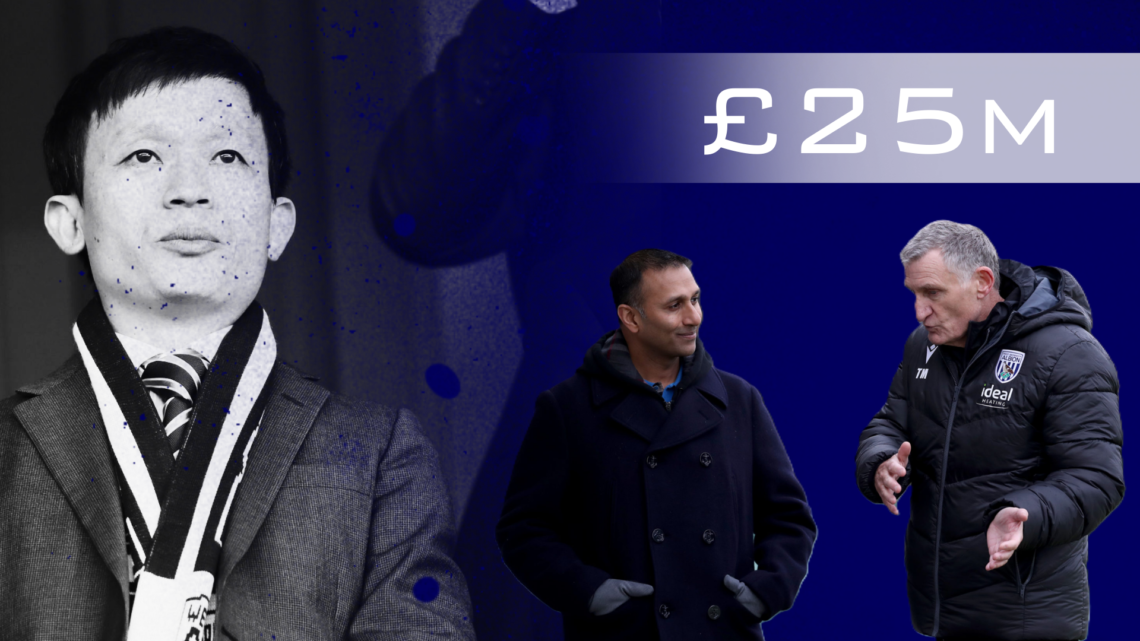


Takeover agreements usually come with a non-disparagement clause, which is just as well given the mess that Shilen Patel has inherited Guochuan Lai at West Brom.
On the anniversary of the American taking control of the club, the Baggies are in an infinitely better place than they were under Lai, even if the headline figures in their latest accounts make for grim reading.
Football club owners – particularly those in the Championship, where many are playing a high-tariff game of promotion-or-bust – have a reputation as slippery, but Lai was Teflon.
West Brom have effectively acted as a bank for two of their last three owners in Lai and Jeremy Peace, with Patel left to pick up the pieces after his £20m takeover.
It will be of little comfort to Albion fans who watched their club teeter on the brink under the Chinese investor’s non-stewardship, but there is some poetic justice in that Lai massively overpaid for the club.
Patel’s takeover, which valued the club at £60m including debt, was a far, far more realistic than the £200m Lai paid to take over from Peace in 2016, regardless of what league the Baggies are in.
At the time, the Chinese government was actively encouraging investment in European football.
President Xi Jinping’s geopolitical aims have since shifted and buying into the sport overseas is no longer incentivised for Chinese investors.
It’s a similar story at Wolves, whose Chinese owners have seemingly lost interest. Birmingham City too suffered from a lack of investment from their Chinese owners until the new regime took over.
Lai was different and arguably more insidious, however. He was essentially a fifth column at the Hawthorns, using the club to his own financial advantage, not in the interests of the team, fans, or town.
Patel is, most West Brom fans agree, a breath of fresh air. For one, he has been transparent and engaged with supporters. He also seems to understand the club’s value as a community institution.
The appointment of Tony Mowbray and the decision to introduce safe standing at the Hawthorns have both gone down well.
Mowbray’s side meanwhile are in a solid position in the Championship table with 12 games to play, despite the departure of Carlos Corberan to Valencia before Christmas.
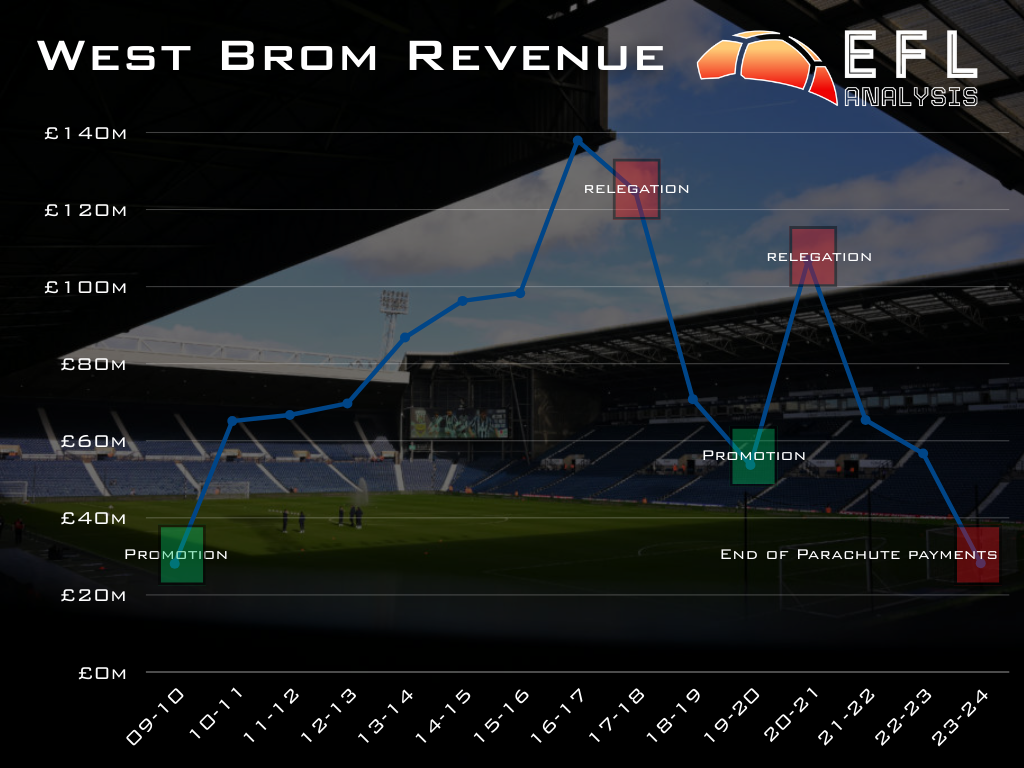
Promotion back to the Premier League would be the ultimate way to ease anxieties about the Baggies’ first season with either top flight revenue or parachute payments for over 20 years.
| Position | Team | Played MP | Won W | Drawn D | Lost L | For GF | Against GA | Diff GD | Points Pts |
| 2 |  Sheff UtdSheffield Utd Sheff UtdSheffield Utd | 34 | 22 | 6 | 6 | 48 | 26 | 22 | 70 |
| 3 |  BurnleyBurnley BurnleyBurnley | 34 | 18 | 14 | 2 | 43 | 9 | 34 | 68 |
| 4 |  SunderlandSunderland SunderlandSunderland | 34 | 17 | 11 | 6 | 50 | 31 | 19 | 62 |
| 5 |  West BromWest Brom West BromWest Brom | 34 | 12 | 15 | 7 | 44 | 31 | 13 | 51 |
| 6 |  BlackburnBlackburn BlackburnBlackburn | 34 | 15 | 6 | 13 | 39 | 34 | 5 | 51 |
| 7 |  CoventryCoventry CoventryCoventry | 34 | 14 | 8 | 12 | 46 | 42 | 4 | 50 |
That said, what do West Brom’s latest financial results tell us about where they are headed under the new owners?
£25m likely to go towards debt repayment and running costs as West Brom file accounts
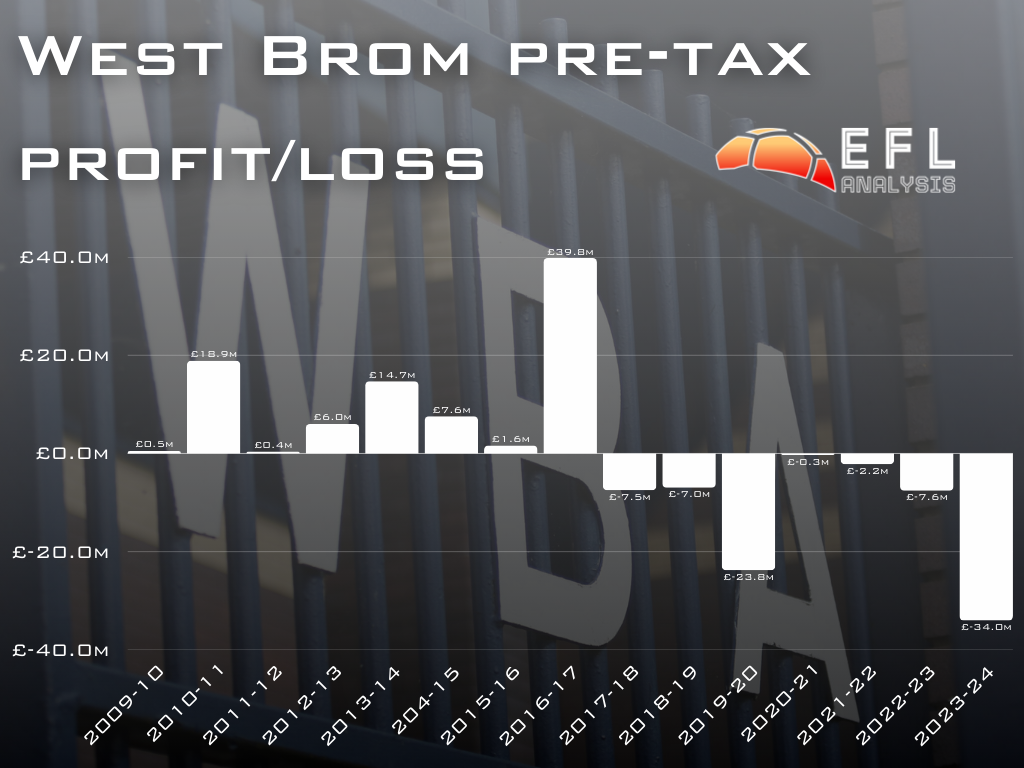
The £34m loss that West Brom made in 2023-24, which they confirmed today, is the heaviest in their history.
The full accounts have been filed with Companies House, the UK’s business registrar, and will be available to read in full shortly.
Before then, we only have West Brom’s press release to go off for a deeper picture of the club’s finances.
The devil will be in the detail, as is always the case with football finance, but the loss was expected given the lack of parachute payments and costs associated with the takeover.
In revenue terms, the £28.2m West Brom earned would put them towards the top end of the turnover table, excluding clubs with parachute payments in the last full published financial year, 2022-23.v
| Rank | Club | Revenue (£m) |
| 1 | Sunderland | 35.5 |
| 2 | Stoke City | 31.2 |
| 3 | Huddersfield | 30.8 |
| 4 | Bristol City | 29.7 |
| 5 | WEST BROM (2023-24) | 28.2 |
| 6 | Middlesbrough | 28.6 |
| 7 | Cardiff | 26.7 |
| 8 | QPR | 23.3 |
| 9 | Swansea | 22.0 |
| 10 | Blackburn | 21.0 |
| 11 | Coventry | 20.4 |
| 12 | Birmingham | 19.7 |
| 13 | Millwall | 19.4 |
| 14 | Luton | 18.4 |
| 15 | Blackpool | 17.3 |
| 16 | Hull | 18.1 |
| 17 | Reading | 16.9 |
| 18 | Rotherham | 15.7 |
| 19 | Wigan | 15.9 |
| 20 | Preston | 15.6 |
Patel has not had sufficient time to improve the club operationally, but there is an argument to say that West Brom should be doing better commercially.
Until Albion are competing with the clubs at the very apex of the Championship table, they will continue to rely on Patel, whose underwriting of the losses is significant.
Patel has confirmed that he has injected £25m, with the bulk of that figure likely to go towards running costs and servicing the club’s debts.

Until we have the full accounts, we won’t know the full extent of the debt situation, which is legacy of the Lai era. Their gross debt stood at £36m in their last full set of accounts.
There will be penalties for early repayment of the loan, so Patel is likely to have continued to paying the structured interest on the loans, which he has personally taken liability for.
Shilen Patel says Albion need more clarity over PSR
In a video interview discussing the accounts and his time at the club so far, Patel touched on the EFL’s Profit and Sustainability Rules (PSR).
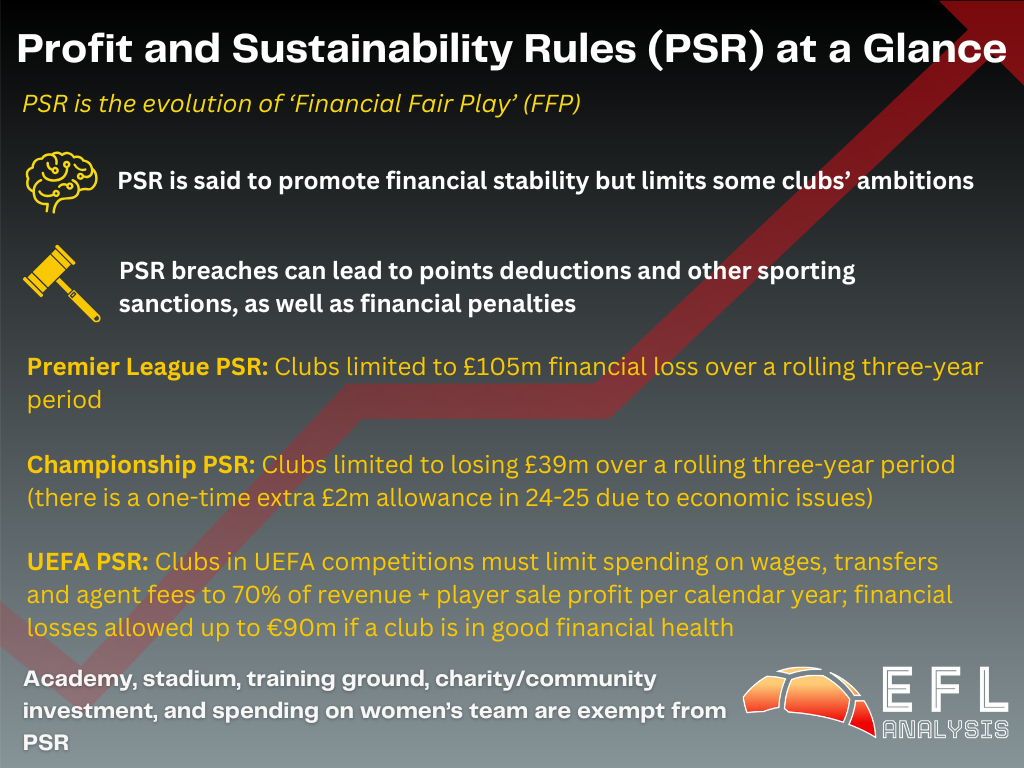
Under the Championship system, clubs are allowed to lose no more than £39m over a rolling three-year period, although £1.5m has been added to that allowance this season because of macroeconomic issues.
On face value, West Brom have lost close to £45m in the last three seasons. However, add-backs, such as investment in youth and infrastructure, is deductible.
Patel says the club continues to comply with PSR, and other clubs have recorded far heavier losses and managed to comply with the EFL’s spending rules.
Patel did, however, express some frustration about the lack of clarity on what will happen with the rules next season.
The Championship was expected to move towards a model that capped spending as a percentage of revenue, following the Premier League in doing so.
But the top flight has now changed its mind and decided to keep the existing system for at least another season, meaning there is ambiguity about whether the EFL could do the same