
 Burnley
 Blackburn Rovers
 Coventry City
 Derby County
 Leeds United
 Luton Town
 Middlesbrough
 Millwall
 Norwich City
 Portsmouth
 Sheffield Wednesday
 Sheffield United
 QPR
QPR


Parachute payments – the sums given to cushion the fall of clubs relegated from the Premier League to the Championship – are one of the most contentious topic in football finance.
Depending on who you ask, they are either a miracle of Premier League benevolence or a corrupting force that is destroying the competitive balance of the Championship and the wider EFL.
Each season, several Football League clubs receive parachute payments. Leicester City and Southampton will be among that number in 2025-26 having been relegated with a whimper this term.
It’s true that there are very few industries that give away a huge chunk of their revenue every year despite the fact they are not technically obliged to. That’s the argument Premier League’s argument.

The EFL’s riposte is that the Premier League does not exist in a vacuum. Without the EFL, the Premier League would be a closed-shop, US franchise sport-style competition, is the view.
There are a million semitones between the two arguments too, of course.
Some clubs in the EFL do very well out of parachute payments and, naturally, are quite happy with the current system.
Others – including EFL chairman Rick Parry – say it is distorting competition in the Championship, creating a league within a league, out of which the same few clubs go up to the Premier League each year.
We’ll leave you to make your own mind up – but suffice to say it’s an argument which has deepened the divide between the top flight and second tier.
| Position | Team | Played MP | Won W | Drawn D | Lost L | For GF | Against GA | Diff GD | Points Pts |
| 1 |  LeedsLeeds LeedsLeeds | 44 | 27 | 13 | 4 | 89 | 29 | 60 | 94 |
| 2 |  BurnleyBurnley BurnleyBurnley | 44 | 26 | 16 | 2 | 61 | 15 | 46 | 94 |
| 3 |  Sheff UtdSheffield Utd Sheff UtdSheffield Utd | 44 | 27 | 7 | 10 | 60 | 35 | 25 | 86 |
| 4 |  SunderlandSunderland SunderlandSunderland | 44 | 21 | 13 | 10 | 58 | 41 | 17 | 76 |
| 5 |  Bristol CityBristol City Bristol CityBristol City | 44 | 17 | 16 | 11 | 57 | 49 | 8 | 67 |
| 6 |  CoventryCoventry CoventryCoventry | 44 | 19 | 9 | 16 | 62 | 57 | 5 | 66 |
| 7 |  MiddlesbroughMiddlesbrough MiddlesbroughMiddlesbrough | 44 | 18 | 9 | 17 | 64 | 54 | 10 | 63 |
| 8 |  MillwallMillwall MillwallMillwall | 44 | 17 | 12 | 15 | 45 | 46 | -1 | 63 |
| 9 |  BlackburnBlackburn BlackburnBlackburn | 44 | 18 | 8 | 18 | 50 | 46 | 4 | 62 |
| 10 |  West BromWest Brom West BromWest Brom | 44 | 14 | 18 | 12 | 52 | 44 | 8 | 60 |
| 11 |  SwanseaSwansea SwanseaSwansea | 44 | 17 | 9 | 18 | 48 | 52 | -4 | 60 |
| 12 |  WatfordWatford WatfordWatford | 44 | 16 | 8 | 20 | 51 | 58 | -7 | 56 |
| 13 |  Sheffield WednesdaySheffield Wednesday Sheffield WednesdaySheffield Wednesday | 44 | 15 | 11 | 18 | 58 | 67 | -9 | 56 |
| 14 |  NorwichNorwich NorwichNorwich | 44 | 13 | 14 | 17 | 67 | 66 | 1 | 53 |
| 15 |  QPRQPR QPRQPR | 44 | 13 | 14 | 17 | 52 | 58 | -6 | 53 |
| 16 |  PortsmouthPortsmouth PortsmouthPortsmouth | 44 | 14 | 10 | 20 | 56 | 69 | -13 | 52 |
| 17 |  Stoke CityStoke City Stoke CityStoke City | 44 | 12 | 14 | 18 | 45 | 60 | -15 | 50 |
| 18 |  PrestonPreston PrestonPreston | 44 | 10 | 19 | 15 | 45 | 55 | -10 | 49 |
| 19 |  Oxford UnitedOxford United Oxford UnitedOxford United | 44 | 12 | 13 | 19 | 44 | 62 | -18 | 49 |
| 20 |  Hull CityHull City Hull CityHull City | 44 | 12 | 12 | 20 | 43 | 52 | -9 | 48 |
| 21 |  DerbyDerby DerbyDerby | 44 | 12 | 10 | 22 | 47 | 56 | -9 | 46 |
| 22 |  LutonLuton LutonLuton | 44 | 12 | 10 | 22 | 41 | 64 | -23 | 46 |
| 23 |  CardiffCardiff CardiffCardiff | 44 | 9 | 16 | 19 | 46 | 69 | -23 | 43 |
| 24 |  PlymouthPlymouth PlymouthPlymouth | 44 | 10 | 13 | 21 | 48 | 85 | -37 | 43 |
And with the Premier League and EFL in talks over a revised version of the parachute payments agreement, the government could even step in via an independent football regulator.
But how much are parachute payments really worth to individual clubs?
- READ MORE: Rival fans make same point as Leicester City eye Cesc Fabregas as Ruud van Nistelrooy replacement
How much Premier League parachute payments are worth in 2025
The Premier League used to officially disclose the breakdown of parachute payments each years, but they now haven’t done so since the 2018-19 season.
That season, the top flight paid just shy of £250m in parachute payments, which are paid out over three years, meaning as many as nine Championship clubs can be receiving the payments at any one time.
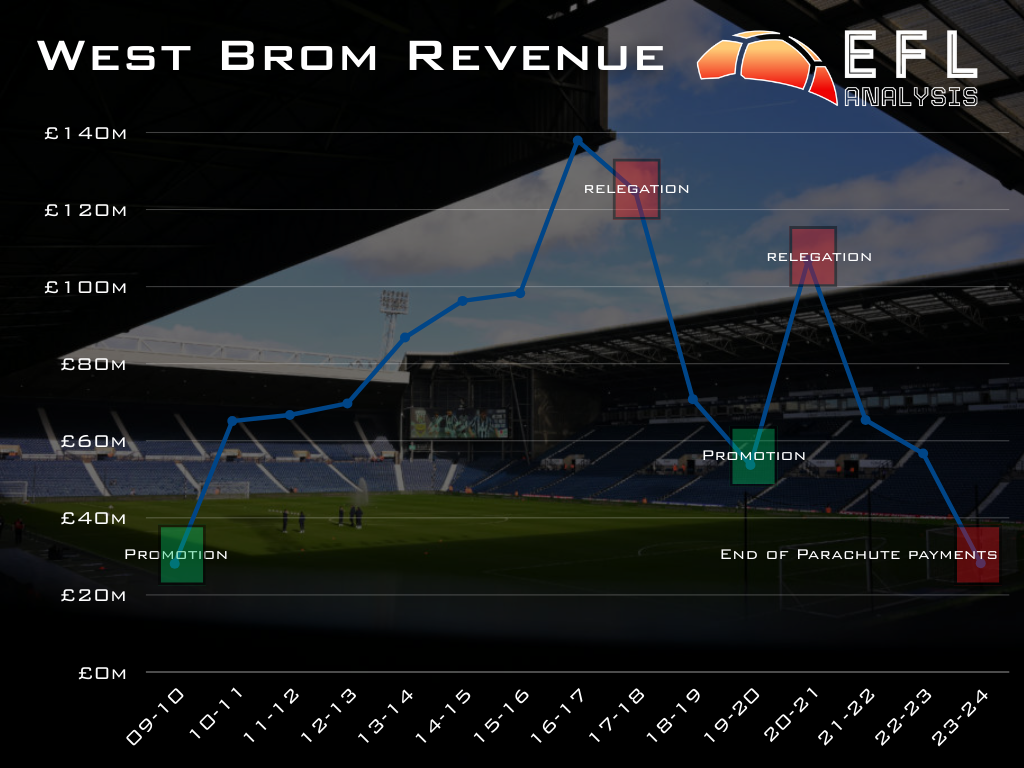
It has been reliably reported that the three clubs relegated last season – Burnley, Sheffield United and Luton – have each received £49m in parachute payments this season.
That is a 10 per cent increase increase on the previous year. It’s also what Leicester City and Southampton can expect next season.

For clubs that have spent one season in the Premier League, 55 per cent of the total parachute payment is paid in the first year following relegation, with the remaining 45 per cent in year two.
So for Luton, they will receive £49m this season and, if they aren’t relegated to League One by then, a further £40m next season.
If a club has spent more than one season in the top flight before relegation, there is an extra £20m in year three.
The Premier League does, however, save cash if relegated teams are promoted back to the Premier League while still in receipt of parachute payments.
This season, top-flight clubs will share around £50m between them because Leeds and Burnley have been promoted while still receiving parachute payments, which they now no longer need next season.
The parachute payments are part of a £1.6bn solidarity fund that the Premier League ringfences for the EFL over a three-year media rights cycle, as well as charitable causes and community initiatives.
- READ MORE: Will Still divides fans with Sky Sports appearance, Southampton warned against ‘boring’ appointment
Will an independent football regulator scrap parachute payments?
The Premier League and EFL have been in talks for some time about a so-called ‘new deal for English football’ that would, in theory, see more money trickle down from the top flight.
The EFL want the Premier League to increase the base solidarity payment each of its clubs receives each year. Every Championship club received around £6m this year, with reduced amounts in League One and League Two.
Instead of setting aside most of the £1.6bn pot for parachute payments, the EFL want parachute payments either scrapped or dramatically reduced in favour of a bigger basic cut.
The two sides have been unable to reach an agreement.
As such, the proposed independent football regulator could be given backstop powers to intervene.
The regulator has broad support and the bill is currently making its way through Parliament. It may also have the power to prevent breakaway leagues, block club colour or badge changes and more.